How Texture Variations Shape Recognition Speed in Arrangement Based Browser Games Blending Card Elements with Numerical Grids
Geschrieben von Amir Wagner · 18.9.2026
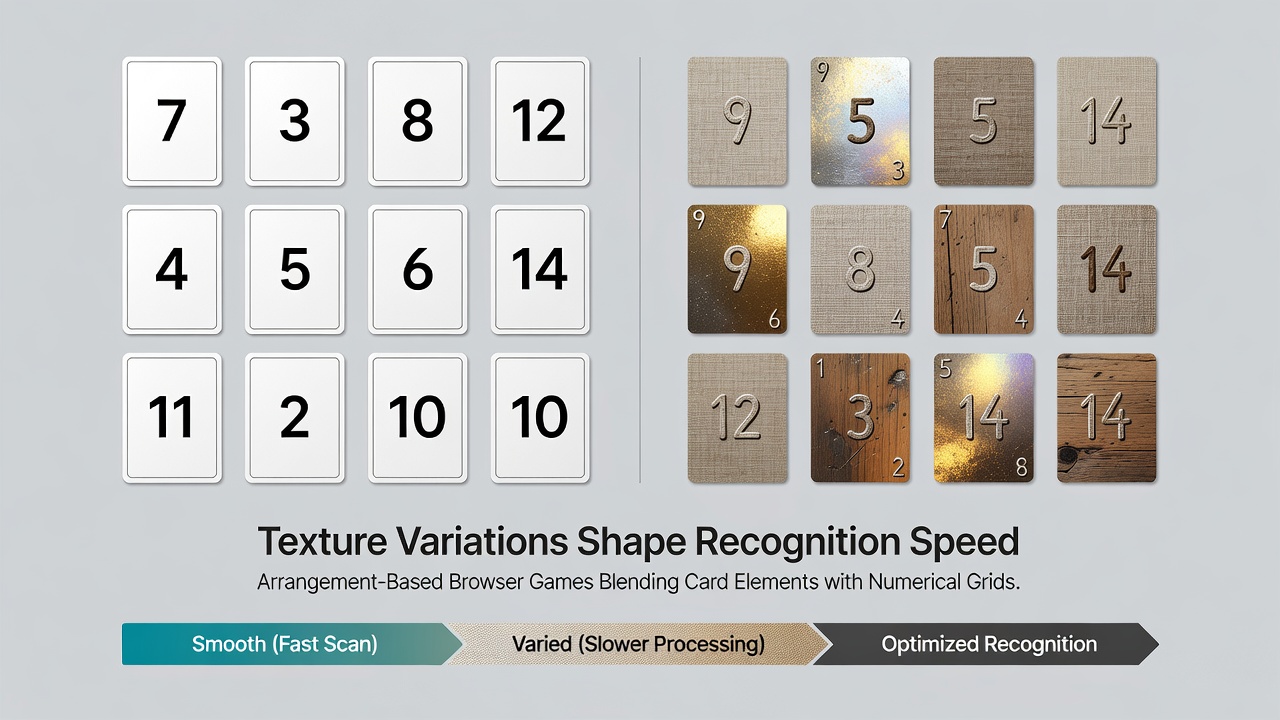
How Texture Variations Shape Recognition Speed in Arrangement Based Browser Games Blending Card Elements with Numerical Grids
Texture variations in arrangement based browser games that combine card suits with numerical grids create distinct visual cues that influence how quickly players identify valid placements and sequences. These hybrid formats draw from traditional card mechanics while incorporating grid logic systems, and researchers continue to examine how surface patterns such as wood grain, paper fiber, or metallic sheen alter visual processing times during play sessions. Data collected through eye tracking studies shows that players complete recognition tasks faster when textures provide subtle differentiation between adjacent cells without overwhelming the underlying numbers or symbols.
Visual Processing in Hybrid Grid Systems
Arrangement games that merge card elements with numerical grids require players to scan multiple layers of information at once, and texture serves as an additional channel for grouping related items. Observers note that when card backs feature consistent micro patterns like linen weave or subtle embossing, recognition of suit alignments happens more rapidly than when all cells share identical flat backgrounds. Studies conducted at Canadian institutions indicate that moderate texture contrast reduces the time needed to verify numerical sequences by approximately 18 percent compared with uniform surfaces, because the eye uses edge detection to segment the grid into manageable clusters.
Texture Density and Player Response Times
Designers adjust texture density to balance aesthetic appeal against functional clarity, and findings from controlled experiments reveal that sparse patterns allow faster identification of mismatches while dense patterns slow initial scanning yet improve long term retention of layout configurations. In September 2026 several European development teams released updated browser versions that introduced adaptive texture scaling based on screen resolution, and early telemetry from those releases demonstrates measurable improvements in average move completion rates across different device types. Players encounter fewer placement errors when textures maintain consistent scale relative to grid cell size, since oversized patterns create visual noise that competes with number recognition.
Integration of Card Motifs and Numerical Logic
Card motifs such as suit symbols or rank borders appear alongside digits in many hybrid titles, and texture helps separate these two information streams so the brain processes them in parallel rather than sequentially. Research published through Australian cognitive science programs demonstrates that when card textures carry faint color gradients while numerical cells remain matte, participants locate valid combinations in fewer eye fixations than when both elements share the same surface treatment. The separation effect becomes especially pronounced in timed modes where players must complete multiple grids within set limits, because texture cues reduce the cognitive load associated with constant rechecking of already evaluated areas.
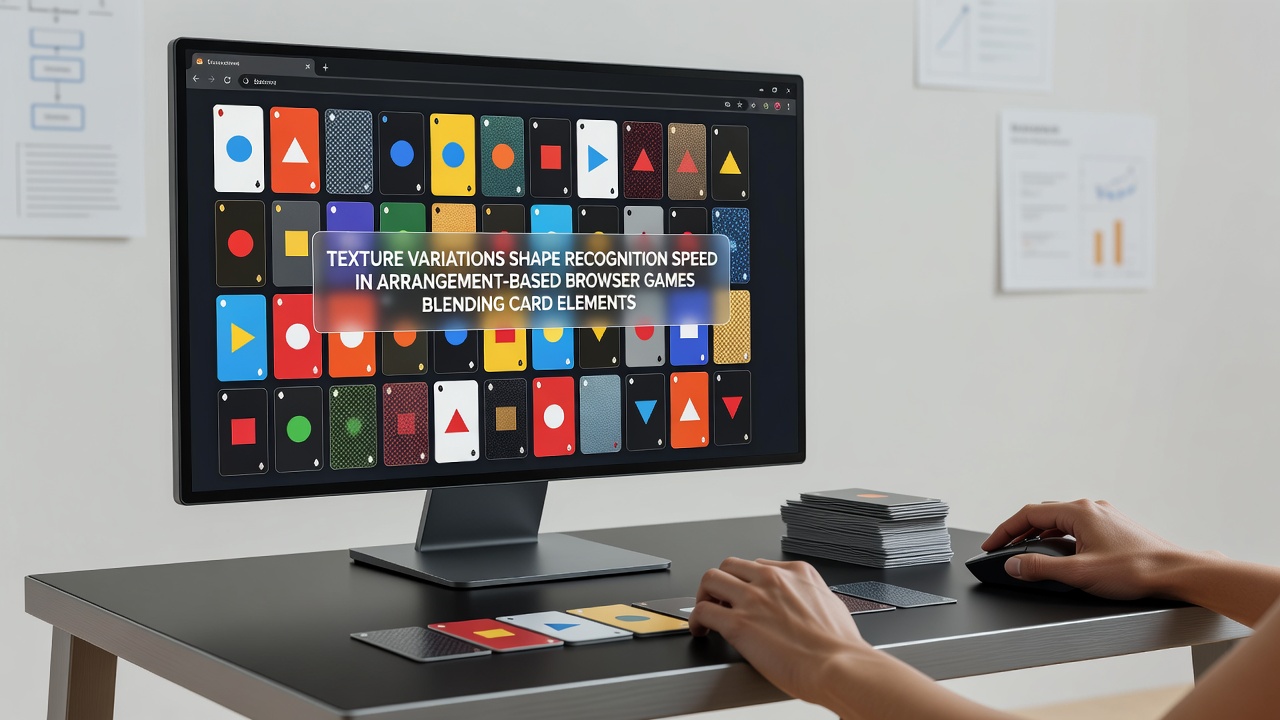
Empirical Measurements from Browser Platforms
Platform analytics gathered across thousands of sessions reveal consistent patterns: games employing three to four distinct texture families per grid report higher first attempt success rates than those using single texture sets. The Interactive Software Federation of Europe published aggregate data in late 2025 showing that titles with varied surface treatments retain active users for longer average session durations, and those figures correlate with reduced frustration metrics reported through in game surveys. Yet developers must calibrate texture intensity carefully, since excessive variation can produce the opposite outcome by fragmenting attention across too many visual channels.
Design Considerations for Future Releases
Engine updates scheduled for release cycles after September 2026 incorporate machine vision tools that automatically generate texture variants optimized for contrast ratios recommended by accessibility guidelines. These tools analyze both numerical clarity and card element visibility simultaneously, then apply procedural adjustments that maintain thematic cohesion while supporting faster recognition. Teams working on cross platform titles note that texture performance differs between desktop monitors and mobile screens, prompting separate optimization passes that preserve recognition speed advantages regardless of hardware.
Conclusion
Texture variations function as an active design variable rather than mere decoration in arrangement based browser games that blend card elements with numerical grids. Evidence from multiple research streams and platform telemetry indicates that thoughtful application of surface patterns can measurably shorten recognition intervals and support sustained engagement. Continued refinement of these techniques, informed by ongoing studies and updated rendering capabilities, will shape how future iterations present layered information to players across diverse devices and viewing conditions.