Cognitive Skill Transfers Between Balloon Arrangement Tasks and Grid Deduction Puzzles in Online Settings
Geschrieben von Riley Otto · 2.10.2026
Cognitive Skill Transfers Between Balloon Arrangement Tasks and Grid Deduction Puzzles in Online Settings
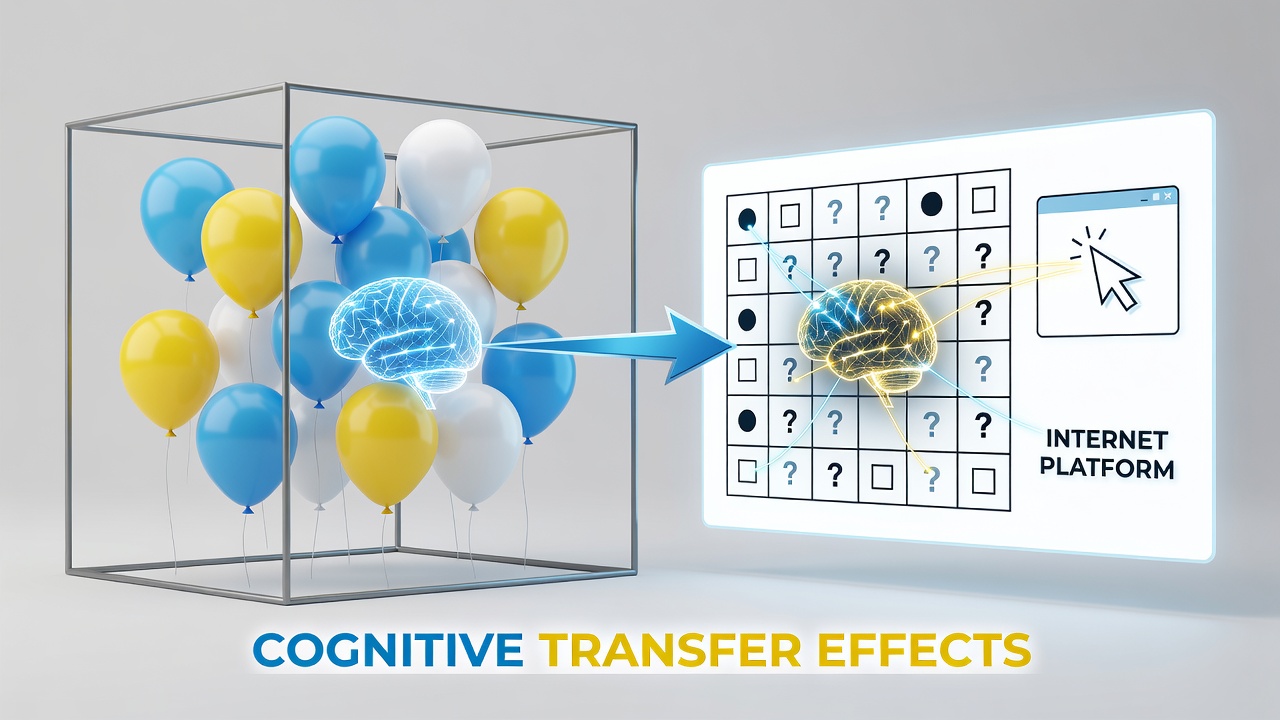
Researchers have examined how skills developed in spatial arrangement tasks within balloon environments transfer to logical deduction processes in grid-based puzzles hosted on internet platforms, and data from multiple studies indicate measurable overlaps in cognitive demands. Observers note that participants who practice positioning elements in dynamic balloon scenarios often apply similar spatial mapping techniques when filling numerical or symbolic grids, while the reverse pattern also appears in controlled trials conducted through 2025 and into October 2026.
Core Mechanisms of Transfer
Studies show that spatial reasoning cultivated during balloon arrangement activities strengthens mental rotation abilities and relational mapping, skills that directly support the elimination strategies required in grid deduction formats. Those who've tracked performance metrics across platforms report that individuals completing balloon tasks with higher accuracy demonstrate faster resolution times on subsequent grid puzzles, particularly when both activities require tracking multiple interdependent variables simultaneously. Evidence suggests this transfer occurs because both task types engage working memory resources in comparable ways, allowing practiced patterns to carry over without extensive relearning.
Digital Platform Observations
Platforms delivering these experiences record user progression data that reveals consistent cross-task improvements, and figures from aggregated analytics in late 2026 highlight reduced error rates among players who alternate between the two formats regularly. Researchers discovered that interface similarities, such as drag-and-drop mechanics or visual feedback cues, further facilitate the shift, although platform-specific variations in timing and object density can modulate the strength of observed effects. One study revealed that users who engaged balloon environments for extended sessions showed enhanced pattern detection when returning to grid layouts, suggesting that the dynamic spatial constraints of balloons prime deductive sequencing abilities.
Research Findings on Skill Overlap
According to reports compiled by cognitive science teams at institutions across Europe and North America, transfer effects appear most pronounced when participants maintain consistent session lengths rather than switching rapidly between unrelated activities. Data indicates that logical deduction in grids benefits from prior exposure to balloon positioning because both require anticipating outcomes several steps ahead, and participants frequently reuse decision frameworks developed in one domain. What's interesting is that the magnitude of transfer varies with task complexity, as simpler balloon arrangements produce modest gains while more intricate configurations correlate with larger improvements on advanced grid challenges.

Additional analyses conducted through university partnerships in Australia and Canada confirm these patterns, with longitudinal tracking showing sustained benefits lasting several weeks after initial training periods. Observers note that visual attention allocation learned in balloon environments helps users scan grid cells more efficiently, reducing the cognitive load associated with exhaustive search strategies. Yet the degree of transfer depends on individual differences in baseline spatial ability, and those starting with stronger skills exhibit quicker adaptation when moving between the formats.
Influencing Variables in Online Contexts
Platform designers have incorporated adaptive difficulty systems that respond to detected transfer patterns, and usage statistics from October 2026 demonstrate increased retention when sessions blend both task types. Research indicates that auditory and visual consistency across environments supports smoother transitions, whereas mismatched feedback timing can temporarily disrupt the application of transferred strategies. Those monitoring large-scale user cohorts find that repeated alternation strengthens the underlying cognitive links, creating a feedback loop where proficiency in one domain reinforces performance in the other without explicit instruction.
Industry organizations focused on digital entertainment, including groups tracking browser-based gameplay trends, have published summaries showing that hybrid exposure produces broader cognitive gains than isolated practice. The reality is that transfer remains partial rather than complete, with certain deductive elements requiring additional grid-specific training even after extensive balloon experience. Experts have observed that age and prior gaming history moderate these outcomes, although the core spatial-to-logical pathway appears robust across demographic groups.
Conclusion
Overall patterns documented through ongoing research underscore reliable connections between spatial arrangement in balloon environments and logical deduction in grid puzzles on internet platforms. Continued data collection through 2026 and beyond will clarify optimal sequencing for maximizing these transfers while accounting for platform variations and user characteristics.